5+ Clematis Varieties That Work Well in Alberta

Share

“Queen of all Vines” is one of the names for Clematis, and it’s rightly earned.  Clematis are beautiful perennial vines with some of the most amazing flowers on the planet. However, clematis can be a difficult and tricky plant to grow here in Alberta.

In this blog, let’s talk about Clematis and Which Clematis Varieties Work Well in Alberta.

Where do Clematis Come From?

What Family is Clematis In?

Clematis are part of the Ranunculus family, otherwise known as the Buttercup family. 

Clematis are native to Spain and Japan and they made their way to North America with settlers and explorers of the 1800’s, like most plant material that is not native here. 

Clematis love warm, humid weather.

The word Clematis means ‘vine’ in Greek. Clematis are perennial vines, they can be either herbaceous or woody perennials. 

Herbaceous Clematis Perennials

Herbaceous Clematis perennials completely die back to the ground in the winter and grow their leaves and stems fresh from the ground each spring. 

This type of Clematis is the one that grows best on the Canadian prairies.

Woody Clematis Perennials

Woody Clematis perennials have woody vines much like trees and shrubs where their leaves die back in the fall and each spring they grow new leaves from their branches where they left off growing the season before. 

Woody Clematis are grown in more southern climates and aren’t hardy for us in Alberta.

Clematis Flowers

There are three basic Clematis flower forms:

  • Flowers grouped together in small clusters
  • Bell shaped flowers that resemble a buttercup
  • Open or flat flower hybrids that are most commonly used in garden horticulture today

Which Clematis Varieties are Right for Alberta?

It’s always good to know where plants come from to get an idea of the environment they require to thrive.  Clematis come from areas that are milder than our central Alberta climate, but there are a number varieties that will work well here.

Talking horticultural zones, Clematis are rated a Zone 4.  Edmonton has historically been considered a Zone 3, but it is sometimes called a 4. 

Horticultural zones are a system of rating  trees, shrubs, and perennials that will grow in  particular climatic conditions. This system was initially instituted in the 1960s to help governments decide on how to make informed decisions about things like forestry, agriculture, and horticulture, but it is useful for home gardeners too.

Here in Edmonton in central Alberta, despite being a horticultural Zone 3, some Zone 4 perennials will grow just fine. It just depends on individual locations and the environmental factors that make some areas just a little warmer.

One of the keys to growing Clematis successfully is to find a location that makes them happy.

Related: What are Plant Hardiness Zones & How do They Work?

Clematis have three basic needs:

  1. Sunlight for their head
  2. Coolness for their feet
  3. Support for Climbing

If you are having trouble with a Clematis, it could be that there isn’t enough sunshine or the soil is too wet.  Many people have success growing Clematis in flower beds on the south side of their homes.

If you are thinking of jumping into growing Clematis, give one of the following Clematis varieties a try first and then expand your palette to other colours once you have success. 

All of the Clematis listed below have a Zone 4 rating, but they tend to be a little tougher and more successful than most other Clematis with the same rating.

Most herbaceous vine Clematis grow quite long. They can grow as tall as 4-5m (15-20 feet) in length in a season.  Some have a large summer flush of blossoms and then continue to flower until the frost, while others have less of an initial flush but they flower consistently until the fall.

Best Kinds of Clematis for Alberta
1. Jackmanii Clematis

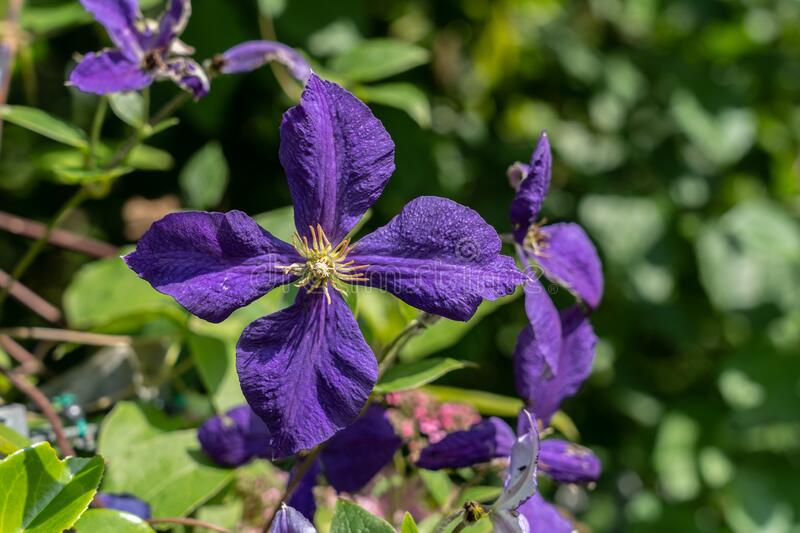
Jackmanii is the most popular Clematis grown on the Canadian prairies.

Jackmanii Clematis, named after English gardener George Jackman, is a standout on the Canadian prairies—if Clematis plants had a popularity contest, this one would win hands down.

It grows as a vigorous vine, reaching up to 4–5 metres (13–16 feet), and puts out striking dark purple flowers with cheerful yellow centers, each about 10 cm (4 inches) across.

The real show starts in summer when Jackmanii bursts into its first wave of blooms, which stick around for weeks and keep popping up until the first frost puts an end to the season.

If you want to get the best display, prune the vine back hard in early spring—right when you spot new growth. This encourages lots of fresh blossoms.

Don’t forget a dose of balanced, slow-release fertilizer (10-10-10) in spring to give your plant the energy it needs for healthy growth and colourful flowers.

Whether you’re new to gardening or a seasoned pro, Jackmanii is a reliable choice for a splash of colour and a little bit of prairie pride in your yard.

2. Nelly Moser Clematis

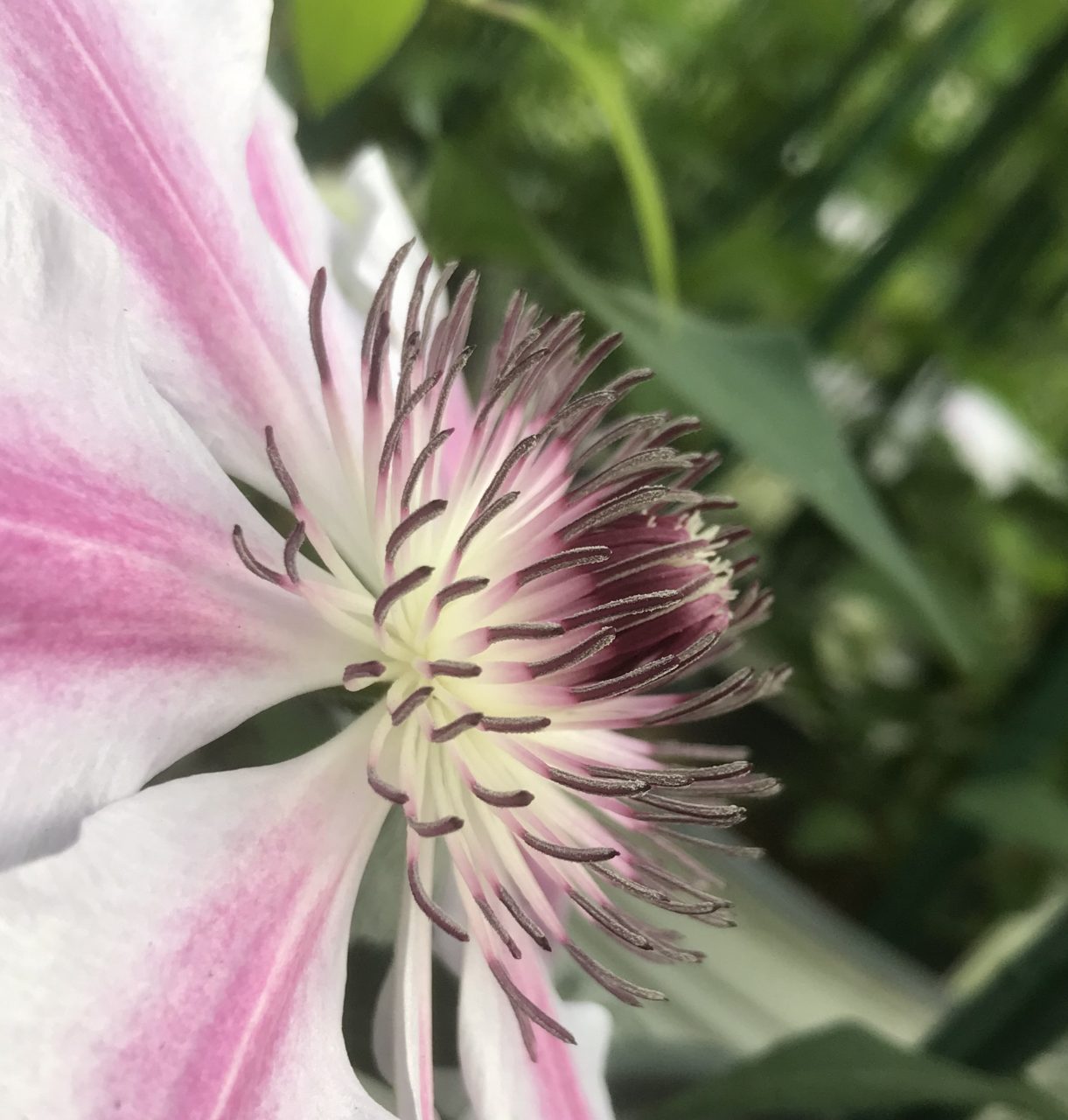
Nelly Moser is another popular prairie Clematis.

Nelly Moser is another beloved Clematis variety, especially admired across the Canadian prairies for its showy, reliable blooms. Named after the French horticulturist Nelly Moser, who contributed greatly to Clematis breeding in the early twentieth century, this variety stands out with its remarkable flowers, each about 10 cm (4 inches) across.

The petals are a soft pink, highlighted by a striking darker carmine midstripe down their centers, and the dramatic dark pink stamens create a lovely focal point at the heart of each blossom.

Like Jackmanii, Nelly Moser thrives as a vigorous vine reaching 4–5 metres (13–16 feet), ideal for trellises, fences, or arbour entrances where its cheerful display brings the garden to life.

Expect Nelly Moser Clematis to kick off the season with a heavy flush of blooms in early summer, followed by repeat flowering that lasts into the fall.

To keep the plant performing at its best, prune Nelly Moser lightly in early spring. Because this variety flowers on old wood—meaning last year’s growth—it’s important not to prune too aggressively. Simply remove any dead or weak stems and give the vine a gentle tidy.

For healthy growth and a bounty of vibrant flowers, feed Nelly Moser once in spring with a balanced, slow-release fertilizer (10-10-10) as soon as the new shoots appear.

Clematis plants also love cool roots, so adding mulch around the base is a great idea. With just a little care, Nelly Moser will reward you with a gorgeous, long-lasting display that brings charm and colour to your garden from summer right through to autumn!

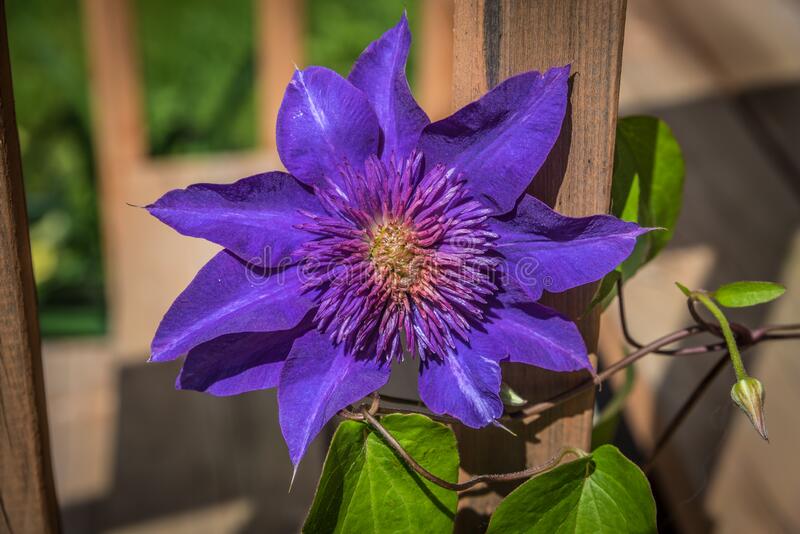
3. Multi Blue Clematis

Multi Blue Clematis is another very hardy Clematis.

Multi Blue is a real gem for prairie gardens, celebrated for its striking, multilayered blooms. Each flower measures about 8–9 cm (3–3.5 inches) across and features a unique, double-flowered look, with layers of rich lavender-blue petals.. At the center, silvery sepals add a touch of shimmer, making every blossom pop against the greenery.

The plant grows as a vigorous vine, easily reaching 4–5 metres (13–16 feet) during the season—perfect for climbing trellises, fences, or arbour entrances where it can show off its dramatic display.

Multi Blue Clematis puts on its first major show in early summer, with flowers that keep appearing right through to autumn. The double blooms gradually open, revealing their intricate structure and a subtle, silvery sheen that seems to change with the sunlight. These eye-catching flowers attract plenty of attention and add a layer of sophistication to any garden.

For the healthiest growth and the best possible flowering, prune Multi Blue lightly in early spring. Since this variety blooms on both old and new wood, it’s important to avoid heavy pruning—just remove dead or damaged stems and give the vine a gentle tidy-up. This approach encourages repeat flowering while ensuring the plant stays robust and manageable.

To keep your Multi Blue looking its best, feed it in the spring with a balanced, slow-release fertilizer (10-10-10) as soon as new shoots appear.

4. Ernest Markham

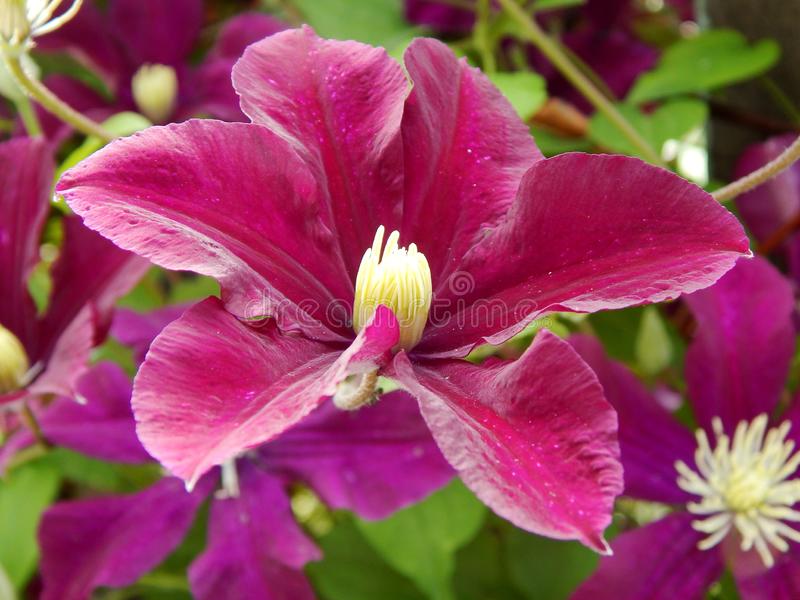
The deep red colour of Ernest Markham.

The Ernest Markham Clematis is a showstopper in any Canadian garden, producing striking, velvety blooms about 10 cm (4 inches) across.

Each flower boasts a deep, vibrant red hue with a subtle sheen that catches the light, while the golden yellow stamens at the centre add a beautiful contrast and focal point.

The petals have a slightly ruffled edge, giving the blooms a rich, textured appearance that really stands out against the foliage.

This variety begins flowering a bit later than some others, typically bursting into colour in early to midsummer and continuing its display with waves of blossoms right through to the fall. The Ernest Markham vine is quite vigorous, capable of reaching heights of 4–5 metres (13–16 feet), making it perfect for covering trellises, fences, or arbour entrances with dazzling colour.

For the best results, prune Ernest Markham lightly in early spring. Since it flowers on both old and new wood, avoid heavy pruning—just remove any dead, weak, or damaged stems, and give the plant a gentle tidy-up to encourage healthy growth and repeat blooms.

In spring, as soon as new shoots appear, feed the vine with a balanced, slow-release fertilizer (10-10-10) to support robust flowering.

Like other Clematis varieties, Ernest Markham prefers cool roots, so laying down a layer of mulch around the base helps retain moisture and keeps the roots happy.

This wonderful Clematis variety is named after Ernest Markham, a respected British horticulturist and Clematis enthusiast from the early twentieth century. Markham’s passion for plant breeding and his dedication to popularizing Clematis varieties have left a lasting legacy for gardeners worldwide.

5. Henryi

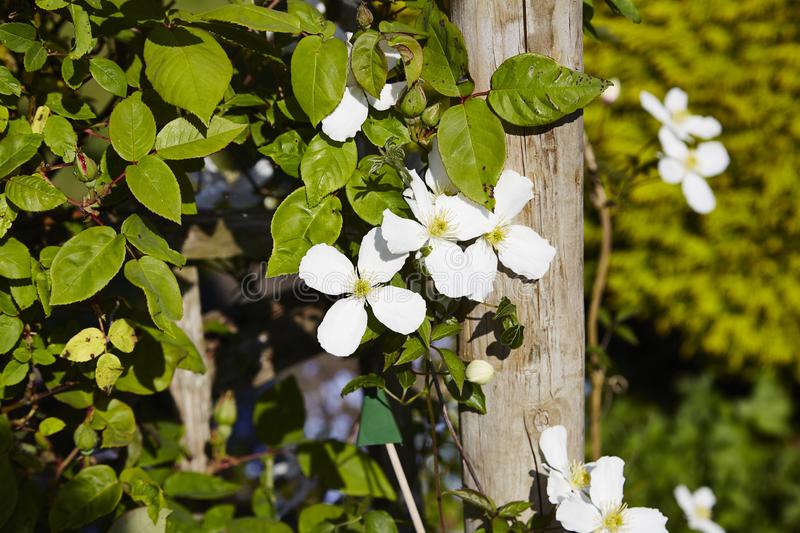
The white blossoms of Henryii.

Henryi is a classic, large-flowered Clematis that truly stands out in any garden.

This striking variety produces elegant, pure white blooms that can reach up to 15–18 cm (6–7 inches) across, making them among the largest you’ll find.

Each flower features beautifully rounded petals with a soft, satiny sheen,

and sometimes a delicate blush of pink or pale lavender along the sepals, adding a touch of depth and sophistication. At the centre, a cluster of creamy yellow stamens adds a subtle contrast, creating a look that’s both refined and eye-catching.

The Henryi Clematis vine itself is vigorous and can climb to impressive heights of 4–5 metres (13–16 feet), easily covering arbours, fences, or even scrambling up mature shrubs.

When it begins to bloom in early summer, Henryi puts on a spectacular, heavy flush of blossoms that transforms the garden. After this initial show, it continues to produce flowers more sporadically right through to the fall, ensuring months of beauty.

For best results, prune Henryi lightly in early spring, just as you would with other large-flowered varieties. Since it flowers on both old and new wood, simply remove any dead, weak, or damaged stems and tidy up the plant to keep it looking its best. Avoid heavy cutting, as this can reduce the number of blooms.

To encourage lush growth and abundant flowering, apply a balanced, slow-release fertilizer (10-10-10) once in the spring when new shoots start to appear.

Like many Clematis, Henryi appreciates cool roots, so adding a generous layer of mulch around the base will help keep the roots moist and happy.

This elegant Clematis is named after Henryi, in honour of Prince Henri of Orléans, Duke of Aumale, a prominent French horticulturist and plant collector from the nineteenth century. His passion for gardens and rare plants is reflected in the lasting appeal of this beautiful vine. With just a bit of care, the Henryi Clematis will reward you with a memorable display that combines classic charm with modern garden performance.

Other hardy Clematis varieties include: Mrs. N. Thompson  (violet flowers with a carmine midstripe), Dr Ruppel (pink flowers with a darker pink midstripe), and Vancouver Daybreak (lavender purple flowers with a whitish midstripe).

Summing Up Clematis Varieties

Whether you’re a seasoned gardener or just starting out, these recommended Clematis varieties offer outstanding beauty, resilience, and a touch of horticultural history to gardens across the Canadian Prairies.

With a bit of thoughtful care—light pruning, regular feeding, and mulching—you’ll enjoy months of spectacular blooms and vibrant colour.

Happy gardening, and may your Clematis thrive and brighten your outdoor space season after season!

More to Explore

©Sharon Wallish Murphy, Gardening with Sharon

Be the first to know when I post a new blog!

This field is for validation purposes and should be left unchanged.

follow her on
Instagram and Facebook

Hot Topics

How to Grow Daffodils

Daffodils are one of those quintessential spring flowers that ring in the spring. Once you learn how to grow daffodils, you’re almost guaranteed a beautiful

Read More »

Wait, I have something for you!

Be the first to know about new blogs and get access to one-of-a-kind content by signing up for my newsletter!

This field is for validation purposes and should be left unchanged.